Being told that you have a herniated disc can sound alarming—especially when it is accompanied by back pain, neck pain, sciatica, numbness, tingling, or weakness.
The good news is that a disc herniation does not automatically mean surgery.
For many people, particularly those without significant or progressive neurological deficits, conservative treatment is recommended as the first step. Chiropractic care can be one component of that conservative approach.
At Okanagan Integrative Health in West Kelowna, our chiropractors assess the entire clinical picture—not just what appears on an MRI. Depending on your symptoms and examination findings, treatment may include spinal manipulation or mobilization, soft-tissue therapy, exercise rehabilitation, activity modification, and education to help you return to normal movement safely.
What Is a Disc Herniation?
Between each of the vertebrae in your spine are intervertebral discs.
These discs act as cushions between the bones of the spine and help distribute load while allowing the spine to bend and move.
Each disc has two primary components:
-
A tougher outer layer called the annulus fibrosus
-
A softer inner portion called the nucleus pulposus
A disc herniation occurs when disc material extends beyond its usual boundaries. Depending on its size and location, that material may irritate or compress a nearby spinal nerve.
Disc problems are commonly described using terms such as:
-
Disc bulge
-
Disc protrusion
-
Disc extrusion
-
Disc sequestration
-
Herniated disc
-
Slipped disc
-
Ruptured disc
Although people often use these terms interchangeably, they can describe different appearances on imaging.
What Does a Herniated Disc Feel Like?
Interestingly, not every disc herniation causes symptoms.
Some people have disc bulges or herniations visible on MRI without experiencing significant pain. This is one reason healthcare providers should interpret imaging findings alongside a person's symptoms and physical examination rather than treating an MRI result in isolation.
When a herniated disc does become symptomatic, the symptoms depend largely on where it is located and whether a nerve is being irritated.
Lumbar Disc Herniation
A herniated disc in the lower back may cause:
-
Lower back pain
-
Pain into the buttock
-
Pain travelling down the leg
-
Sciatica
-
Numbness or tingling in the leg or foot
-
Changes in reflexes
-
Weakness in certain muscles
-
Pain aggravated by sitting, bending, coughing, or sneezing
Cervical Disc Herniation
A disc herniation in the neck may cause:
-
Neck pain
-
Shoulder or upper-back pain
-
Pain travelling into the arm
-
Numbness or tingling in the arm or hand
-
Muscle weakness
-
Changes in reflexes
The location of your symptoms can give your chiropractor important information about which spinal structures or nerve roots may be involved.
Does a Chiropractor “Put the Disc Back In”?
No—and this is an important misconception to clear up.
A chiropractic adjustment does not push a herniated disc back into place.
Disc herniations are biological injuries that change over time. Chiropractic treatment is instead directed toward improving how the patient feels and functions while the irritated tissues recover.
Treatment may focus on:
-
Reducing pain
-
Improving spinal mobility
-
Decreasing protective muscle tension
-
Improving tolerance to movement
-
Managing nerve-related symptoms
-
Maintaining activity where appropriate
-
Restoring strength and function
-
Helping the patient gradually return to work, sport, and everyday activities
Interestingly, research has also shown that herniated disc material can sometimes reduce in size naturally over time.
A 2024 meta-analysis involving more than 2,000 patients treated conservatively found that spontaneous resorption occurred in a substantial proportion of lumbar disc herniations. Extruded and sequestrated disc herniations appeared particularly likely to reduce in size over time.
This does not mean every herniation will disappear, nor does it mean symptoms always correlate perfectly with changes seen on MRI. However, it is one reason a disc herniation should not automatically be viewed as a permanent structural problem.
How Does a Chiropractor Assess a Disc Herniation?
Before deciding how to treat a suspected disc herniation, your chiropractor will first determine whether your symptoms are actually consistent with one.
An assessment may include:
Medical History
Your chiropractor will ask about:
-
Where your pain is located
-
Whether symptoms travel into an arm or leg
-
Numbness or tingling
-
Weakness
-
Positions that aggravate or relieve your symptoms
-
Previous episodes
-
Recent injuries
-
Your work and activity demands
-
Previous imaging or treatment
Neurological Examination
If nerve involvement is suspected, your chiropractor may assess:
-
Muscle strength
-
Reflexes
-
Sensation
-
Nerve tension
-
Coordination
-
Walking pattern
These findings help determine whether a spinal nerve may be involved and whether the condition is appropriate for conservative treatment.
Movement Assessment
We may also look at how your symptoms respond to movements such as bending forward, extending backward, rotating, sitting, standing, or walking.
One movement may significantly aggravate your symptoms while another reduces them.
That information can help guide both hands-on treatment and rehabilitation.
How Do Chiropractors Treat Disc Herniations?
There is no single treatment that is appropriate for every disc herniation.
Treatment depends on the location of the herniation, severity of symptoms, neurological findings, irritability of the condition, and how the patient responds.
1. Spinal Manipulation
Spinal manipulation—often called a chiropractic adjustment—may be appropriate for certain patients with a disc herniation.
The objective is not to reposition the disc.
Instead, spinal manipulation may be used to improve joint mobility, reduce pain, and help restore comfortable movement.
The technique and amount of force can also be modified considerably. Someone experiencing significant acute nerve irritation may be treated very differently from someone dealing with mild residual back pain several months after an injury.
A recent systematic review and meta-analysis evaluating conservative treatments for lumbar disc herniation found improvements in pain and disability associated with exercise, manipulation, and traction-based treatments, although the authors noted substantial differences between the studies and emphasized the need for better-quality research.
2. Gentle Spinal Mobilization
Not everyone with a herniated disc needs—or is comfortable with—a traditional chiropractic adjustment.
Gentler mobilization techniques can be used when appropriate.
Rather than producing a quick movement through a joint, mobilization uses slower and more controlled movements to improve spinal mobility.
This can be useful during more irritable stages of an injury or when a patient simply prefers a gentler treatment approach.
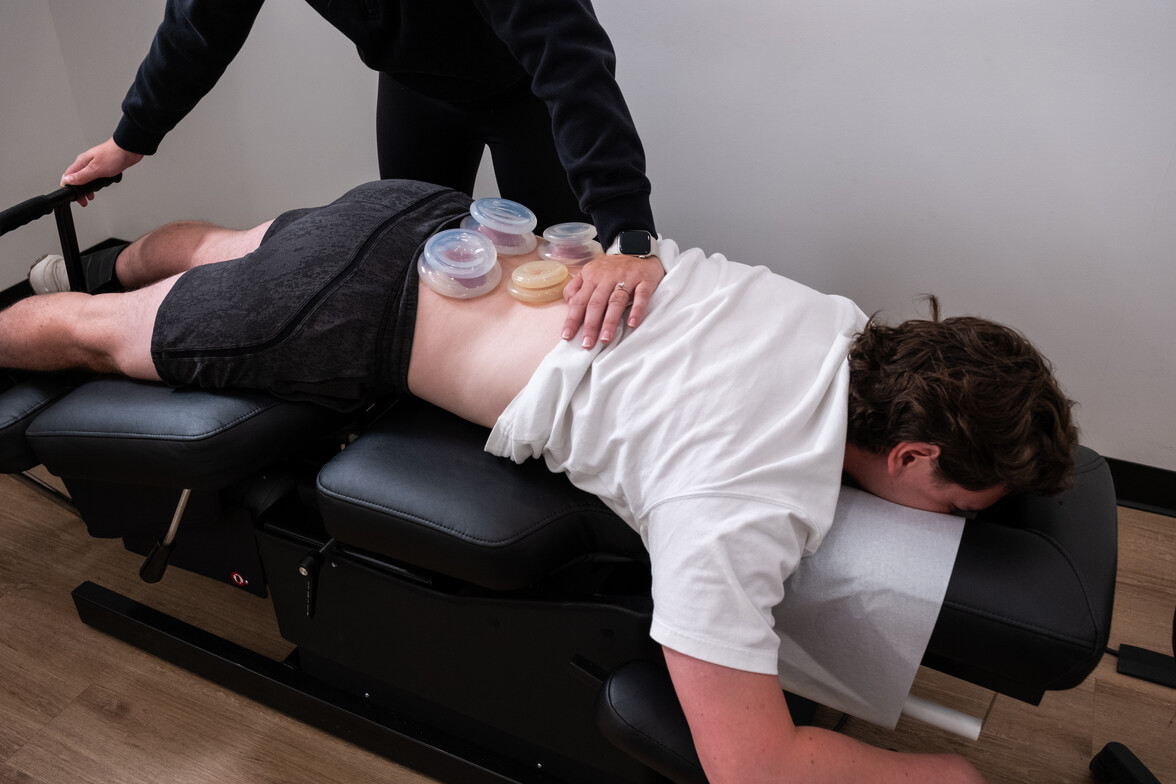
3. Traction and Decompression-Based Techniques
Some patients may respond well to carefully selected traction or decompression-based techniques.
The objective is not to permanently “create more space” or physically pull a herniated disc back into place.
Instead, these techniques may temporarily alter loading of the spine and can be useful when they reduce a patient's symptoms.
The important question is not whether every patient with a disc herniation should receive traction—it is how that individual patient's symptoms respond to it.
If a treatment consistently makes leg or arm symptoms worse, the approach should be reconsidered.
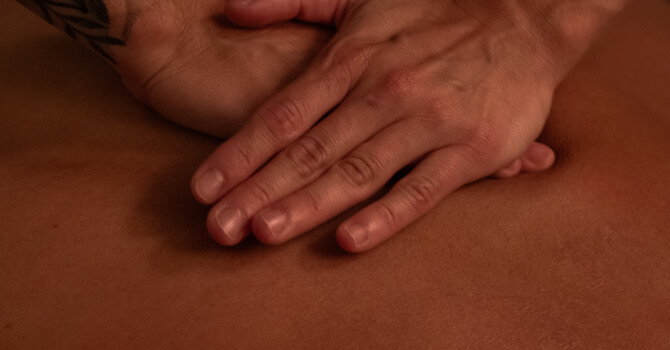
4. Soft-Tissue Treatment
Disc-related pain rarely exists in complete isolation.
When someone is experiencing significant back or neck pain, the surrounding muscles often become tense and protective.
Treatment may therefore include techniques directed toward muscles surrounding the affected area.
Depending on the patient, treatment may address the:
-
Lumbar muscles
-
Gluteal muscles
-
Hip muscles
-
Thoracic spine
-
Neck and shoulder muscles
-
Other areas compensating for painful movement
Soft-tissue treatment does not repair the herniated disc itself, but it can be useful for addressing secondary muscular pain and helping restore comfortable movement.
5. Exercise Rehabilitation
Rehabilitation is one of the most important components of managing many disc herniations.
The exercises used will depend on the individual.
Early rehabilitation might involve relatively simple movements that help reduce symptoms and maintain mobility.
As the condition improves, rehabilitation can progress toward:
-
Core strength
-
Hip strength
-
Spinal mobility
-
Trunk endurance
-
Lifting mechanics
-
Functional movement
-
Work-specific activities
-
Running and sport
-
Resistance training
The ultimate goal is not simply to make the pain disappear.
It is to restore enough capacity that the person can confidently return to the activities that matter to them.
6. Finding Movements That Reduce Your Symptoms
An important part of treatment is determining whether your symptoms have a directional preference.
For example, some patients with disc-related symptoms notice that certain movements cause their leg pain to move farther down the leg, while other movements cause the symptoms to retreat toward the lower back.
When leg symptoms begin moving out of the foot or calf and closer toward the spine, this is sometimes referred to as centralization.
Your chiropractor may use these symptom responses to help determine which movements and exercises are most appropriate.
The right exercise for one disc herniation can therefore be completely different from the right exercise for another.
Should You Rest With a Herniated Disc?
Usually, prolonged bed rest is not the goal.
During a very painful flare-up, temporarily modifying certain activities may be appropriate. However, staying completely inactive for an extended period can contribute to stiffness, weakness, and reduced confidence with movement.
Instead, treatment often involves finding a tolerable level of activity.
That may initially mean:
-
Short walks
-
Changing positions frequently
-
Temporarily reducing heavy lifting
-
Modifying gym exercises
-
Limiting positions that significantly aggravate nerve symptoms
Activities can then gradually be reintroduced as symptoms improve.
Our goal is usually to help patients do more over time, rather than create a growing list of movements they should permanently avoid.
Do I Need an MRI?
Not necessarily.
A chiropractor may be able to identify a clinical pattern consistent with a disc herniation based on your history, neurological examination, and physical assessment.
Imaging becomes more important when there are concerning neurological findings, an unusual clinical presentation, significant trauma, symptoms that are not progressing as expected, or when imaging would meaningfully change the treatment plan.
If further investigation is required, your chiropractor can discuss appropriate next steps and coordinate with other healthcare providers when necessary.
Already have an MRI?
Bring your report with you.
We can review the imaging findings in the context of your symptoms and examination.
Can a Herniated Disc Heal Without Surgery?
Many can.
Current evidence supports beginning with conservative management for many lumbar disc herniations when serious neurological deficits are not present.
The World Federation of Neurosurgical Societies Spine Committee concluded that conservative management should generally be the first-line treatment for lumbar disc herniation in the absence of cauda equina syndrome, significant motor deficits, or other serious neurological findings.
Research also shows that disc material can naturally regress or resorb over time.
A 2024 meta-analysis of 31 studies involving 2,233 patients reported spontaneous resorption in approximately 70% of lumbar disc herniations managed conservatively. The likelihood varied considerably according to the type of herniation, with extrusions and sequestrations more likely to resorb than contained bulges.
This is one reason we encourage patients not to assume that an MRI showing a “large disc herniation” automatically means they require surgery.
The clinical picture matters.
When Does a Herniated Disc Require Surgery?
Some disc herniations do require surgical assessment.
Referral may be considered when there is:
-
Significant or progressive muscle weakness
-
Severe neurological impairment
-
Persistent disabling symptoms despite an appropriate trial of conservative care
-
Evidence of cauda equina syndrome
Surgery and conservative care should not be viewed as competing approaches. They are different tools used for different clinical situations.
Part of responsible chiropractic care is recognizing when conservative treatment is appropriate—and when a patient needs additional investigation or specialist assessment.
When Is a Disc Herniation an Emergency?
Although uncommon, cauda equina syndrome is a medical emergency.
Seek immediate medical attention if severe back or leg symptoms are accompanied by:
-
New loss of bladder or bowel control
-
Difficulty initiating urination
-
Numbness around the groin, genitals, buttocks, or inner thighs
-
Rapidly progressing weakness in one or both legs
These symptoms should not wait for a routine chiropractic appointment.
Chiropractic Treatment for Disc Herniations in West Kelowna
At Okanagan Integrative Health, our approach to disc herniations is based on the person in front of us—not simply the wording on an MRI report.
Your treatment plan may incorporate:
-
Chiropractic manipulation or mobilization
-
Gentle traction-based techniques when appropriate
-
Soft-tissue treatment
-
Exercise rehabilitation
-
Activity modification
-
Education about your condition
-
Progressive return to work, exercise, and sport
If your condition requires further medical investigation or specialist assessment, we can also help identify when referral is appropriate.
The goal is not to “put your disc back in.”
The goal is to reduce symptoms, restore movement, rebuild strength, and help you return to the activities you enjoy.
Experiencing Back Pain, Sciatica, or Symptoms From a Disc Herniation?
If you have been diagnosed with a disc herniation—or are experiencing back pain, leg pain, numbness, tingling, or sciatica—our chiropractic team at Okanagan Integrative Health in West Kelowna can assess your symptoms and determine whether conservative treatment is appropriate.
Book an appointment with one of our chiropractors to get started.
Sources & Further Reading
Yaman O, Guchkha A, Vaishya S, et al. The role of conservative treatment in lumbar disc herniations: WFNS Spine Committee recommendations. World Neurosurgery: X. 2024;22:100277.
Thavarajasingam SG, et al. Exercise, manipulation and traction physiotherapy in the conservative management of lumbar disc herniation: A systematic review and meta-analysis. 2025.
Zou T, Liu XY, Wang PC, et al. Incidence of spontaneous resorption of lumbar disc herniation: A meta-analysis. Clinical Spine Surgery. 2024;37(6):256–269.
Penchev P, Ilyov IG, Todorov T, et al. Comprehensive analysis of treatment approaches for lumbar disc herniation: A systematic review. Cureus. 2024;16(8):e67899.
This article is intended for general educational purposes and does not replace an individualized assessment or medical advice.