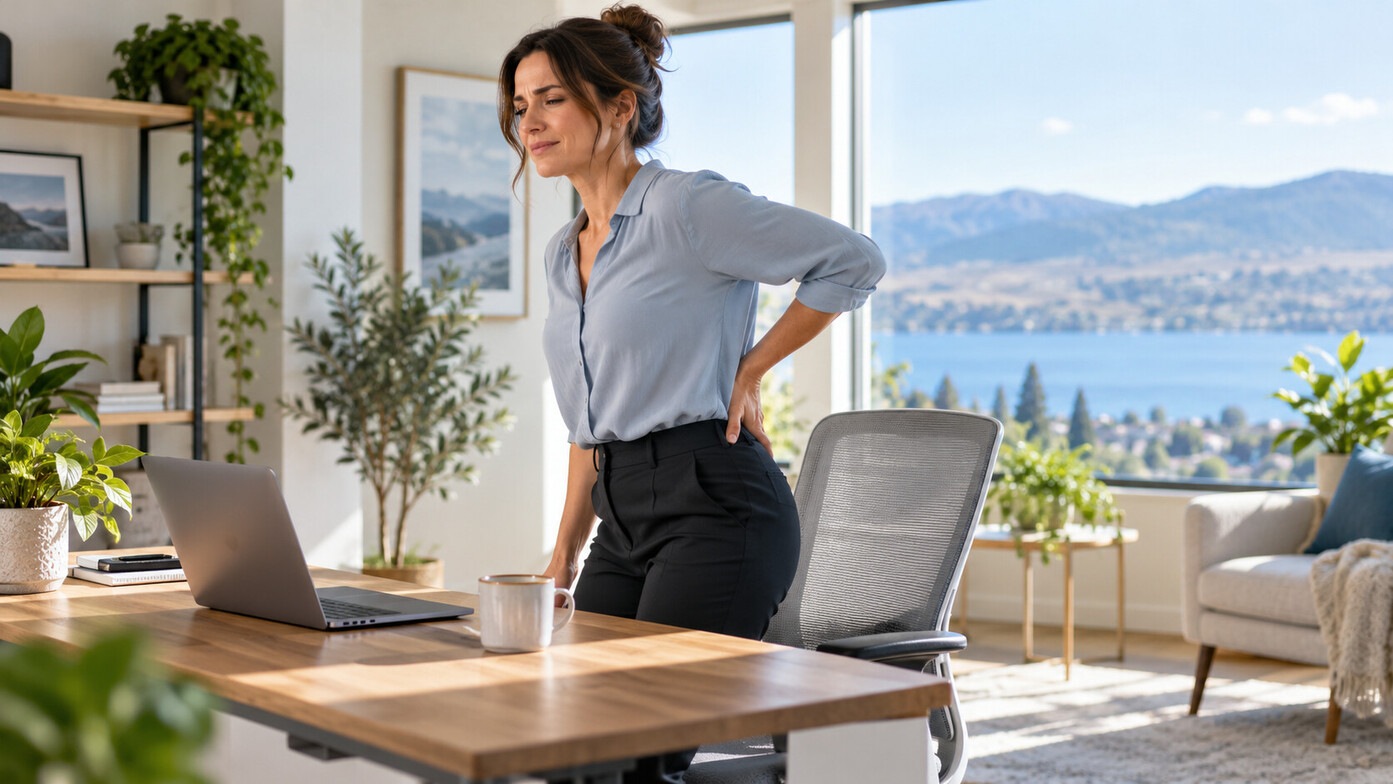
Have you ever stood up after a long day at your desk and felt like your lower back needed a few steps to loosen up? Maybe your back feels perfectly fine while you're moving, but sitting through a meeting, driving for an extended period, or relaxing on the couch leaves you feeling stiff and uncomfortable.
If this sounds familiar, you're certainly not alone.
Lower back pain after sitting is a common complaint, particularly among people who work at desks, spend long hours driving, or alternate between sedentary work and physically demanding activities.
The good news is that pain after sitting doesn't automatically mean something is seriously wrong with your spine. In many cases, symptoms can improve with appropriate movement, exercise, activity modifications, and individualized treatment.
At Okanagan Integrative Health in West Kelowna, our chiropractors help patients understand what's contributing to their back pain and develop practical strategies to improve comfort and function.
Let's look at why your lower back might hurt after sitting—and what you can do about it.
Why Does Sitting Make My Lower Back Hurt?
Lower back pain after sitting can occur when sustained positioning, muscle fatigue, sensitivity in the spinal joints or discs, or an existing back condition makes remaining seated uncomfortable.
Your lumbar spine is made up of five vertebrae, with intervertebral discs between them, surrounded by muscles, ligaments, joints, and nerves.
These structures work together to support your body and allow movement.
When you're sitting, the position of your hips, pelvis, and spine changes. Depending on your sitting position, different tissues experience different amounts of loading.
Sitting itself isn't inherently harmful. However, remaining in one position for a prolonged period can become uncomfortable, particularly when you're already experiencing back pain.
Importantly, there isn't always one identifiable structure responsible. Most cases of lower back pain are considered non-specific, meaning symptoms cannot reliably be attributed to a single damaged muscle, joint, or disc.
5 Common Reasons Your Lower Back Hurts After Sitting
1. Staying in the Same Position for Too Long
One of the most common patterns we hear from patients is that their back feels worse after remaining still and improves once they start walking.
Your body is designed to tolerate many different positions, but staying in one position for an extended period can become uncomfortable.
When you're seated for hours, certain muscles remain active to support your trunk, while your hips and spine spend less time moving through their available ranges.
For some people, this contributes to stiffness or discomfort when they first stand up.
The solution isn't necessarily to sit perfectly straight all day. Often, simply changing positions more frequently and incorporating short movement breaks can help.
2. Muscle Fatigue and Reduced Physical Conditioning
Your abdominal, back, hip, and pelvic muscles all contribute to supporting your body during daily activities.
If you spend most of your day relatively inactive, your muscles may be less accustomed to prolonged or repeated physical demands.
Similarly, someone who exercises regularly but spends eight hours sitting may still experience discomfort associated with sustained positions.
This doesn't necessarily mean you have a weak core.
Low back pain is influenced by multiple factors, and strength is only one part of the picture.
However, progressive exercise that improves strength, endurance, and general physical capacity can be beneficial for many people experiencing recurring lower back pain.
3. Irritation or Sensitivity Involving the Lumbar Discs
Your intervertebral discs sit between the vertebrae and help distribute forces through the spine.
Certain sitting positions and movements can change how these structures are loaded.
For some individuals with disc-related symptoms, prolonged sitting or bending forward may aggravate their discomfort.
In other cases, symptoms may improve when standing or walking.
A disc herniation can sometimes irritate a nearby nerve root, causing pain that travels into the buttock or leg. Other symptoms may include tingling, numbness, or weakness.
However, back pain that worsens while sitting does not automatically mean you have a bulging or herniated disc.
Disc changes are also common in people without symptoms, so imaging findings need to be interpreted alongside a clinical assessment.
If you'd like to learn more, read our article on how chiropractors assess and treat disc herniations.
4. Sensitivity in the Lower Back or Hip Joints
The joints of the lumbar spine and surrounding pelvic region allow movement and help transfer forces during everyday activities.
Some people experience discomfort when transitioning from sitting to standing, especially after remaining seated for a long time.
Hip mobility, lumbar movement, and individual movement preferences may all influence how comfortable this transition feels.
A clinical assessment can help determine whether there are meaningful restrictions, areas of sensitivity, or other movement-related factors contributing to your symptoms.
It's also worth remembering that a joint doesn't need to be "out of place" for it to become painful.
5. Stress, Sleep, and Other Lifestyle Factors
Back pain isn't influenced by physical loading alone.
Poor sleep, increased stress, reduced activity, previous pain experiences, and other health factors can all affect how sensitive your body is to discomfort.
For example, someone experiencing increased stress and several nights of poor sleep may notice that their usual desk setup suddenly feels much less comfortable.
This doesn't mean the pain is imaginary. It means that pain is complex, and effective treatment sometimes requires looking beyond a single muscle or joint.
Is Poor Sitting Posture Causing My Back Pain?
It's tempting to blame lower back pain on slouching, a rounded spine, or an imperfect office chair.
However, the relationship between posture and back pain is more complicated than many people realize.
There is no single sitting posture that's ideal for everyone, and slouching occasionally doesn't automatically damage your spine.
Some positions may feel better or worse depending on your individual symptoms. For example, one person may prefer sitting with additional lumbar support, while another feels more comfortable in a slightly reclined position.
Rather than trying to maintain a rigid, perfectly upright posture all day, focus on finding comfortable positions and changing them regularly.
Your next posture is often more useful than trying to find one perfect posture.
6 Things You Can Do to Reduce Lower Back Pain After Sitting
1. Take Regular Movement Breaks
If your job requires prolonged sitting, try standing up and moving periodically.
As a practical starting point, consider taking a short break every 30–60 minutes, adjusting the frequency to your comfort and work demands.
You don't need an elaborate stretching routine.
A few minutes of walking, standing, or gently moving your spine may be enough to reduce the discomfort associated with remaining still.
2. Adjust Your Workstation for Comfort
A comfortable workspace can make prolonged desk work easier.
Try positioning your screen at a comfortable viewing height, keeping your keyboard and mouse within easy reach, and adjusting your chair so your feet are supported.
Some people benefit from a small lumbar cushion or rolled towel behind the lower back.
A standing desk can also provide another position to alternate between, although standing all day isn't necessarily better than sitting all day.
The goal is comfort, flexibility, and regular movement—not perfect posture.
3. Incorporate Gentle Movement
Depending on your symptoms, gentle walking, pelvic tilts, or comfortable spinal movements may help reduce stiffness.
Start with movements you can tolerate and avoid forcing your back into positions that significantly increase pain.
Not every stretch is appropriate for every condition.
For example, someone with leg pain aggravated by forward bending may need a different approach than someone whose symptoms improve in that direction.
An individualized exercise assessment can help identify movements that are appropriate for your presentation.
4. Build Strength and Endurance Gradually
Strength and conditioning exercises can play an important role in managing persistent lower back pain.
A rehabilitation program might incorporate trunk strengthening, hip exercises, walking, resistance training, or other activities based on your symptoms and goals.
You don't necessarily need complicated exercises.
Consistency, gradual progression, and finding activities you can maintain are often more valuable than chasing a particular exercise.
5. Stay Active Without Pushing Through Significant Pain
If your back feels uncomfortable after sitting, avoiding all activity isn't usually the best approach.
For most uncomplicated lower back pain, clinical guidelines encourage staying active and gradually returning to normal activities.
That might mean taking shorter walks, temporarily modifying your workouts, or breaking household tasks into manageable sessions.
Some discomfort during recovery isn't necessarily harmful, but activities that produce substantial or progressively worsening symptoms should be modified and reassessed.
6. Get an Assessment if Your Symptoms Keep Returning
If you've adjusted your workstation, tried moving more frequently, and stayed active but your symptoms continue, an assessment may help.
Recurring pain can have several contributing factors, and understanding your individual presentation is more useful than repeatedly trying generic stretches from the internet.
Can Chiropractic Care Help Lower Back Pain From Sitting?
Chiropractic care may be an appropriate option for certain types of musculoskeletal lower back pain.
Clinical guidelines support approaches that include exercise, patient education, and, when appropriate, manual therapies such as spinal manipulation or joint mobilization.
At Okanagan Integrative Health, our West Kelowna chiropractors take an individualized approach rather than relying on a single treatment technique.
Your initial assessment may involve reviewing your symptoms, medical history, daily activities, spinal and hip movement, strength, and neurological function when indicated.
Depending on the findings, your treatment plan may include:
-
Spinal manipulation or joint mobilization: Hands-on treatment that may help reduce pain and improve movement.
-
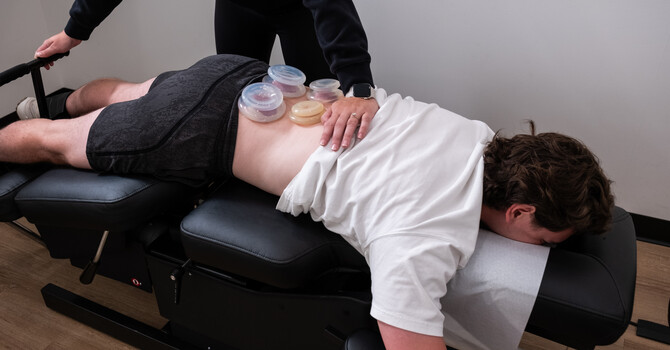
Soft tissue therapy: Techniques aimed at managing muscular discomfort and sensitivity.
-
Individualized rehabilitation exercises: Strengthening and movement strategies designed around your needs.
-
Movement and workstation advice: Practical adjustments to make daily activities more comfortable.
-
Activity modification: Guidance on gradually returning to activities that currently aggravate your symptoms.
Manual treatment can provide relief for some people, but it works best as one component of an active, individualized management plan rather than a substitute for exercise and self-management.
The goal is to help you feel more comfortable, regain confidence in movement, and develop strategies to manage your symptoms over time.
When Should You Be Concerned About Lower Back Pain?
Most episodes of lower back pain are not caused by a serious medical condition.
However, certain symptoms require prompt medical attention.
Seek emergency medical care if you develop new difficulty urinating or loss of bladder or bowel control, numbness around the groin or saddle region, or rapidly worsening leg weakness.
You should also seek urgent assessment if back pain occurs with significant trauma, fever or serious illness, or other concerning symptoms.
For pain that is persistent, worsening, disrupting your sleep or daily activities, or accompanied by new leg symptoms, arrange an assessment with an appropriate healthcare professional.
A chiropractor can help determine whether your presentation is suitable for conservative musculoskeletal care or whether further medical investigation is needed.
Find Relief From Lower Back Pain in West Kelowna
If your lower back feels stiff after sitting, uncomfortable during long drives, or painful when standing up from your desk, you don't have to rely on guesswork to figure out what might help.
At Okanagan Integrative Health, our chiropractic team works with patients from West Kelowna, Kelowna, and surrounding Okanagan communities.
We combine thorough assessment, hands-on treatment, and movement-based rehabilitation to develop personalized care plans for back pain and other musculoskeletal concerns.
Whether your goal is to sit comfortably through the workday, get back to the gym, enjoy golfing, or simply move with less discomfort, we're here to help you understand your options.
Ready to have your back pain assessed?
Book a Chiropractic Appointment at Okanagan Integrative Health or call (236) 766-0691.
Our clinic is located at 204-525 Highway 97 South, West Kelowna, BC, in the Okanagan Lake Shopping Centre.
Frequently Asked Questions
Why does my lower back hurt when I stand up after sitting?
Remaining seated can aggravate sensitive tissues or contribute to a feeling of stiffness. Discomfort may be related to muscles, joints, or other musculoskeletal factors. If symptoms recur, an assessment can help clarify the contributing factors.
Is walking good for lower back pain?
Walking is generally a useful, low-impact activity for many people with uncomplicated lower back pain. Start with a comfortable duration and gradually increase as tolerated.
Does lower back pain after sitting mean I have a herniated disc?
No. Disc-related conditions are only one possible explanation. Many people experience back pain without a herniated disc, and some people have disc changes on imaging without experiencing pain.
Should I stretch my hamstrings if my back hurts after sitting?
Not necessarily. Hamstring tightness isn't always the cause of lower back discomfort, and aggressive stretching can aggravate certain presentations. Read our related article on lower back pain and hamstring tightness.
Can a chiropractor help with lower back pain from sitting?
For suitable musculoskeletal conditions, chiropractic treatment may help reduce symptoms and improve function. Care may include manual therapy, exercise, education, and movement modifications based on your assessment.
Do I need an X-ray or MRI for lower back pain?
Most people with uncomplicated lower back pain don't need immediate imaging. X-rays or MRIs are generally considered when clinical findings suggest they could change treatment decisions or when a serious underlying condition is suspected.
Clinical References
-
World Health Organization. (2023). WHO guideline for non-surgical management of chronic primary low back pain in adults.
-
National Institute for Health and Care Excellence. Low back pain and sciatica in over 16s: Assessment and management (NG59).
-
George SZ, et al. (2021). Interventions for the Management of Acute and Chronic Low Back Pain: Clinical Practice Guidelines. Journal of Orthopaedic & Sports Physical Therapy.
-
Low back pain and sitting time, posture and behavior in office workers: A scoping review. (2025).
This article provides general health information and does not replace an individualized clinical assessment or medical advice.